Notes4 min
I hacked my school
An old server, a FNAF demo, and ten minutes to explain it to people who don't write code.
I used an XSS vulnerability to play Five Nights at Freddy’s on my school’s website. I got past night one.
That was the proof of concept. The reason I started looking was much less interesting: I was bored.
The main site looked old as hell. Some paths looked modern. It felt like a system being patched while people were still using it, with different generations of software sitting next to each other. That was a hunch, but it gave me somewhere to start.
I’m still a student there. Nobody had asked me to audit anything. I just went into recon.
The old server
The first proper “oh shit” was the remote code execution finding.
The evidence pointed to IIS 6.0 on Windows Server 2003, with WebDAV still exposed. That put CVE-2017-7269 on the list: a buffer overflow in the WebDAV service that can let an attacker run code on the server.1
On the live site, I checked that WebDAV responded and that a short conditional header reached its parser. Cloudflare sat in front of it and the old service was still reachable. That didn’t show the live server would execute the exploit.
I reproduced the RCE in a private lab with a similar Windows/IIS setup. It worked there. I never ran it against the school’s server, so I don’t have a production shell to claim.
Even so, it was enough to make me stop and think: I might actually be able to fuck up the school server.
Freddy in the browser
Then there was the XSS.
Some login return parameters were being copied into hidden form fields without proper HTML encoding. Quotes and angle brackets came back raw. That let input escape the field it was supposed to stay inside.
For the presentation, I took it further and built a proof of concept that used it to run FNAF 1 on the site.
I even got through night one. Apparently I had time for that.
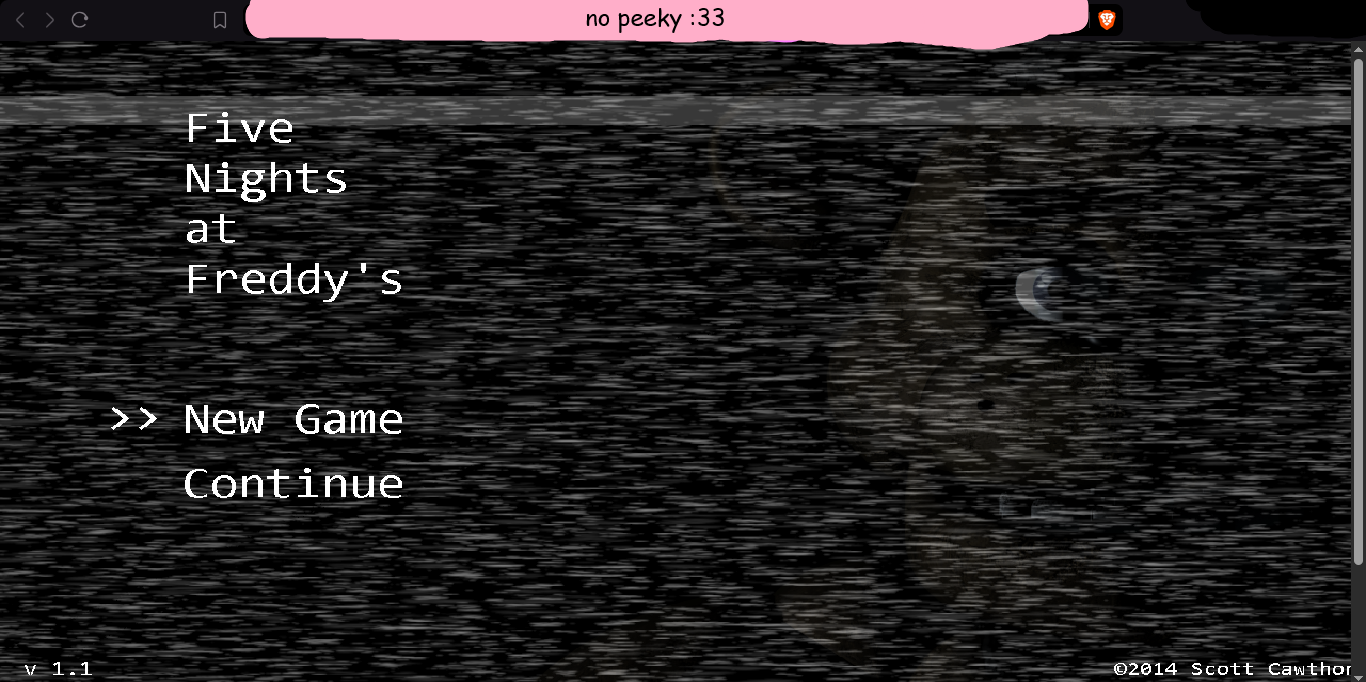
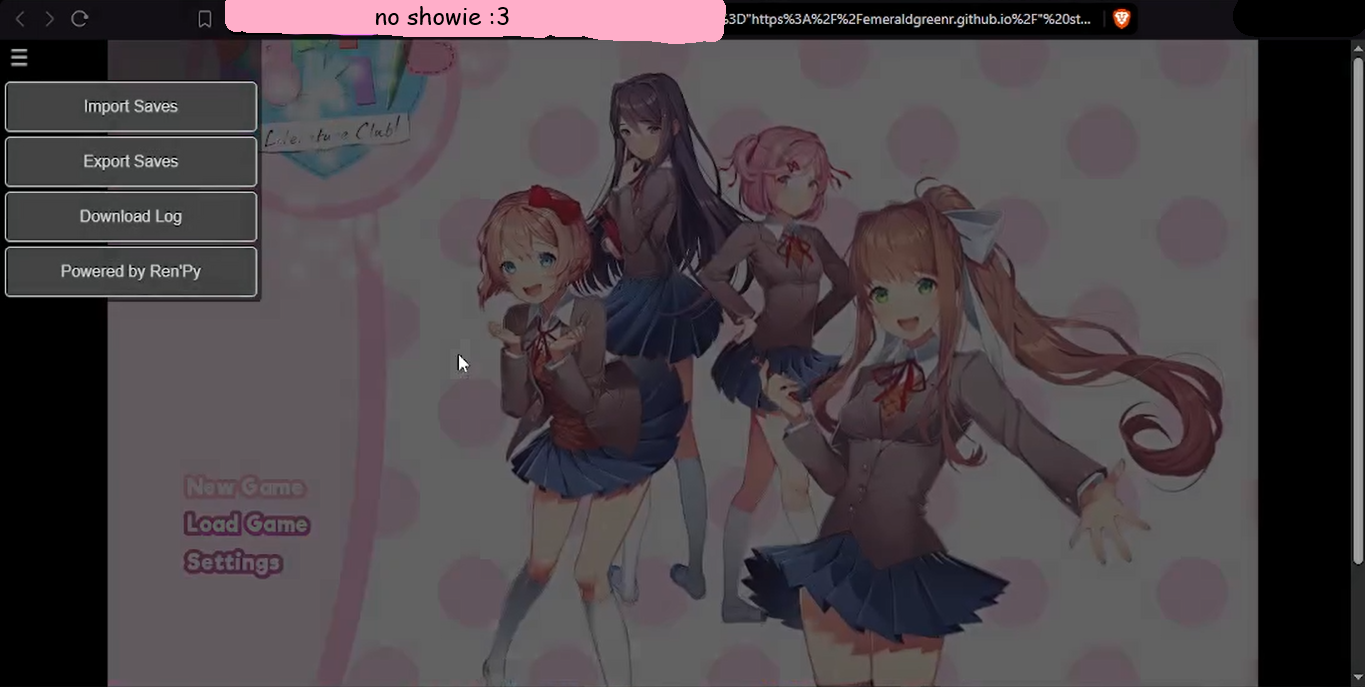
The FNAF demo made the bug visible. Code I’d supplied was running in a page on the school’s origin. That same class of bug is a lot less funny on a page where someone is logged in.
The session cookies I inspected were missing HttpOnly and Secure, and had no explicit SameSite attribute. Plain HTTP also returned a login page and issued a session cookie. Missing HttpOnly mattered alongside the XSS because that flag prevents JavaScript from reading a cookie.2
The full chain
The XSS let me build the whole path from a login page to a working session.
I put a simulated parent login in an iframe over the page. It ran on the school’s origin, so the browser treated it as the real thing and autofilled the saved username and password. If the account was already signed in, it skipped the form and went straight to the token.
Then it read document.cookie and printed the session token on the page.
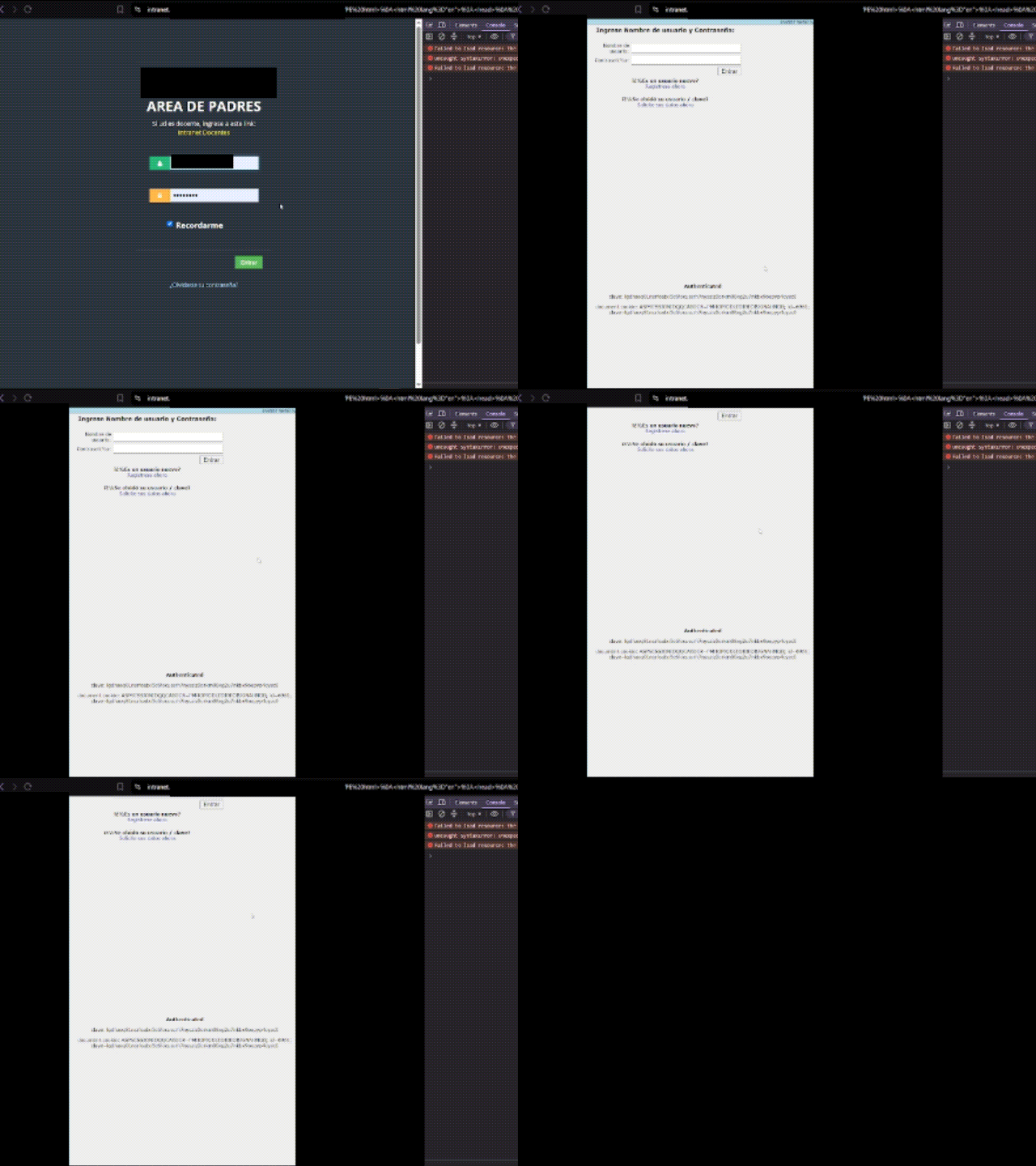
That token could sign in as the account or send requests with the session attached.
I ran the chain against my own account. I didn’t take or reuse anyone else’s session.
What else was in the report
| Observation | What I established |
|---|---|
| Raw SQL Server errors | An empty request exposed a database error. SQL injection remained unproven. |
| VBScript errors | Some invalid input produced detailed runtime errors. That particular output was HTML-encoded. |
| Recovery messages | The recovery page exposed a specific account-not-found response. |
| Protected student pages | Nine checked endpoints redirected unauthenticated requests to login. |
| Public documents | Sampled files were blank forms or public material. They weren’t leaked student records. |
Some initial suspicions were false positives. An old registration form requested an account from administrators. It didn’t immediately grant access. A leftover FrontPage file also looked more interesting than the routes behind it turned out to be.
Those corrections stayed in the report. I wanted whoever read it to know which findings had survived checking.
Ten minutes
I told the director. They said we’d talk later.
The next day, I got pulled out of class and given ten minutes to show non-technical staff the old server, the RCE, the XSS and the cookies.
They seemed impressed, but I came away feeling that the implications hadn’t really landed. Getting a game to run on the website is easy to see. Understanding what attacker-controlled code could do in a logged-in browser takes a different explanation.
The Claude fix
On another day, I got pulled out of class again, this time to meet someone technical.
From what I saw, the report went into Claude Code and the vibe-fixing began.
The school has since fixed it, but I haven’t checked every path myself. I don’t know whether every affected route was covered, or whether the underlying problems are gone. That’s less satisfying than “I reported it and everything was fixed.”
I was also told that next year they’re replacing the infrastructure and platform with something built entirely using Claude, and that they’d bring me in for security.
So the old site is due to be replaced by a vibe-coded one, and I might get to audit the sequel.
I still need to check the fixes on this one.
Footnotes
-
The CVE Program record describes the WebDAV buffer overflow. It documents the vulnerability, not the patch state or exploitability of the school’s particular server. ↩